




A slip and fall at a Fort Lauderdale hotel or resort can turn a relaxing trip, business stay, cruise stopover, or family vacation into weeks of pain, medical bills, and missed work. A wet lobby floor, a slick pool deck, a leaking ice machine, an uneven walkway, or a poorly lit stairwell may seem like a simple accident at first. In some cases, however, the fall happened because the property failed to fix or warn guests about a dangerous condition.
Hotels and resorts invite guests onto their property for business. That means they have a responsibility to take reasonable steps to keep guest areas safe. When a property owner, management company, or resort operator fails to discover hazards that should have been identified, an injured guest may have a claim for compensation.
A Fort Lauderdale slip and fall lawyer at Winston Law can review what happened, investigate what the hotel knew, and help determine what your injury claim may be worth.
What Duty Do Hotels and Resorts Owe Their Guests?
Hotels and resorts owe paying guests reasonable care. Guest areas should be inspected, maintained, and managed to reduce the risk of preventable falls. That duty can apply to lobbies, hallways, elevators, stairwells, pool decks, restaurants, bars, parking areas, sidewalks, bathrooms, and guest rooms.
This duty is central to a premises liability claim. A hotel may be responsible when it knew about a hazard, should have discovered it through reasonable inspection, or failed to warn guests before someone was hurt.
Common hazards at hotels and resorts include:
- Rainwater tracked across tile lobby floors
- Wet or slippery pool decks
- Spilled drinks in bars, restaurants, and event spaces
- Leaking ice machines or vending areas
- Loose rugs or floor mats
- Broken stairs or handrails
- Poor lighting in hallways, stairwells, or parking areas
- Uneven walkways, cracked pavement, or raised thresholds
Fort Lauderdale hotels and resorts see heavy foot traffic from tourists, cruise passengers, business travelers, and local visitors. With that volume of guests, property owners should have procedures for inspecting high-risk areas, responding to spills, and warning guests before a fall occurs.
What Must You Prove in a Hotel Slip and Fall Claim?
Falling at a hotel does not automatically mean the property is legally responsible. To recover compensation, an injured guest generally must prove that a dangerous condition existed, that the hotel knew or should have known about it, and that the condition caused the fall and resulting injuries.
Florida has a specific rule for falls involving a transitory foreign substance in a business establishment. This may include water, spilled drinks, food, cleaning products, or another temporary substance on the floor. In those cases, the injured person must prove the business had actual or constructive knowledge of the dangerous condition and should have taken action to fix it.
Actual knowledge may exist when hotel staff created the danger, saw the hazard, received a complaint, or were told about the condition before the fall.
Constructive knowledge may exist when the hazard was present long enough that careful employees should have discovered it, or when the same type of hazard happened often enough that the property should have anticipated the risk.
That knowledge question is often among the most important parts of a hotel slip-and-fall case. The hotel may argue that the spill happened moments before the fall or that staff had no reasonable opportunity to respond. Evidence can help answer those arguments.
Common Hotel and Resort Slip and Fall Locations
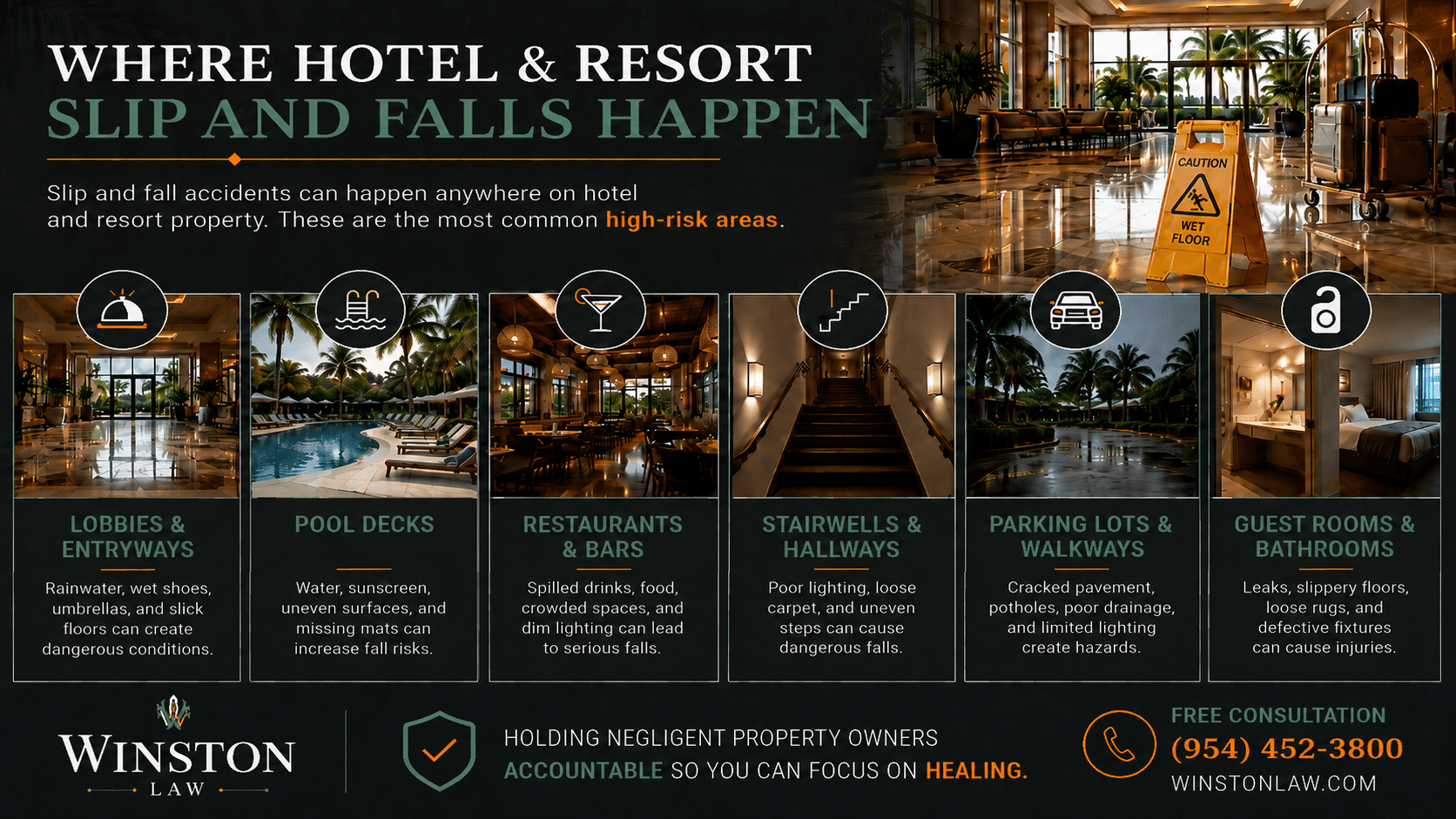
Slip-and-fall accidents at Fort Lauderdale hotels and resorts often occur in areas where water, foot traffic, alcohol service, cleaning activities, or poor lighting create a risk. Some of the most common locations include:
- Lobbies and entryways: Rainwater, wet shoes, umbrellas, and slick tile can create a dangerous surface near entrances.
- Pool decks: Water, sunscreen, uneven surfaces, missing mats, and inadequate warnings can make pool areas especially hazardous.
- Restaurants and bars: Spilled drinks, dropped food, crowded spaces, and dim lighting can increase the risk of falls.
- Stairwells and hallways: Poor lighting, loose carpeting, broken handrails, and uneven steps can cause serious injuries.
- Parking lots and walkways: Cracked pavement, potholes, poor drainage, and limited lighting may create dangerous conditions outside the hotel.
- Guest rooms and bathrooms: Leaks, slippery tubs, loose flooring, and defective fixtures may contribute to guest injuries.
These issues are not limited to hotels. Similar hazards can arise at resorts and other tourist destinations throughout South Florida.
How Does Shared Fault Affect What You Can Recover?
Florida follows a modified comparative negligence rule. This means being partly at fault does not always end a claim, but it can reduce or eliminate compensation. Under Florida’s comparative fault law, a person found more than 50 percent at fault generally cannot recover damages in a negligence case.
Hotels and insurance companies often use comparative fault arguments in slip-and-fall claims. They may argue that the guest was distracted, ignored warning signs, walked through an obvious hazard, wore unsafe footwear, or failed to pay attention.
Those arguments should not be accepted at face value. A hotel may still be responsible if it failed to inspect the area, left a known hazard in place, failed to post warnings, used unsafe flooring, ignored prior complaints, or failed to follow its own safety procedures.
How Long Do You Have to File a Hotel Slip and Fall Claim in Florida?
Most Florida negligence claims, including hotel and resort slip and fall cases, must be filed within two years of the date of injury. This deadline was shortened from four years to two years under a 2023 change in Florida law.
Waiting too long can quietly damage a valid claim. Surveillance footage may be overwritten, cleaning logs may be lost, staff members may change jobs, and witnesses may become harder to locate. The sooner an investigation begins, the better the chance of preserving the evidence needed to prove what happened.
What Evidence Strengthens a Fort Lauderdale Hotel Slip and Fall Case?
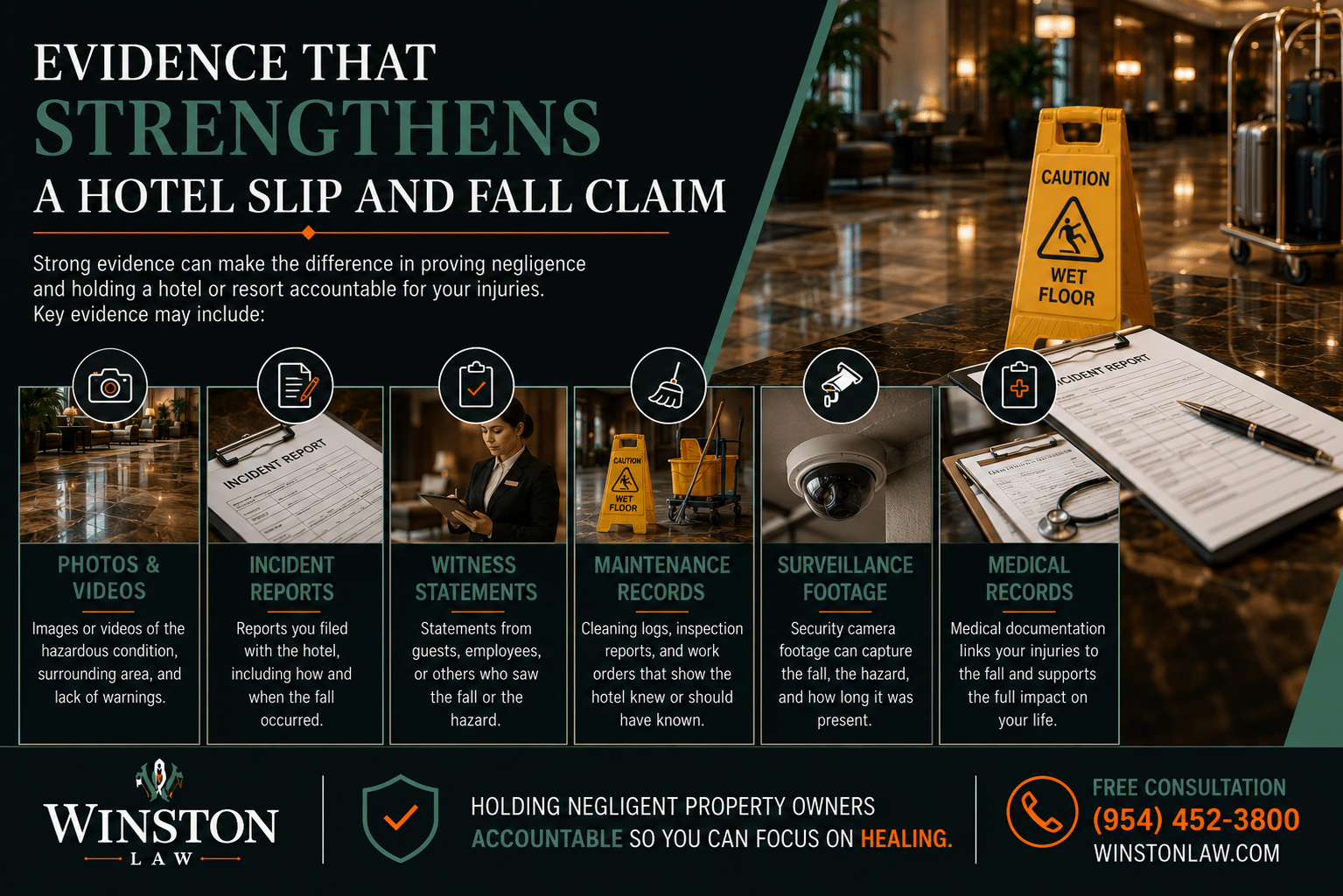
Strong documentation can be the difference between a denied claim and a fair recovery. In hotel and resort cases, the most important evidence often shows what the hazard was, how long it existed, whether the property knew or should have known about it, and how the injury affected the guest.
Helpful evidence may include:
- Photos or video of the hazard
- Photos of the surrounding area
- Photos of visible injuries
- Names and contact information for witnesses
- Names of hotel employees or managers who responded
- A written incident report from hotel management
- Surveillance footage from the lobby, hallway, pool area, restaurant, or parking lot
- Cleaning and inspection logs
- Maintenance records
- Medical records connecting treatment to the fall
- Receipts, pay records, and other proof of financial losses
Guests should report the fall to hotel management, seek medical care, document the scene if they can do so safely, and avoid giving recorded statements to the insurance company without legal guidance.
What Compensation May Be Available After a Hotel or Resort Fall?
The value of a hotel slip and fall claim depends on the injury, the evidence, the available insurance coverage, and how the fall affects the guest’s life. A serious fall can cause more than a short-term inconvenience, especially when the injury involves surgery, a head injury, a broken bone, a back injury, or long-term mobility problems.
Compensation may include:
- Emergency medical care
- Hospital bills
- Follow-up treatment
- Physical therapy or rehabilitation
- Future medical care
- Lost income
- Reduced earning capacity
- Pain and suffering
- Loss of enjoyment of life
- Out-of-pocket expenses caused by the injury
For visitors injured while traveling, the claim may also involve disrupted travel, difficulty getting follow-up care after returning home, and the added challenge of dealing with a Florida property owner or insurer from another city or state.
Hurt at a Hotel or Resort? Talk to a Fort Lauderdale Slip and Fall Lawyer
A hotel or resort injury should not leave you paying for someone else’s carelessness. If a dangerous condition at a Fort Lauderdale hotel caused your fall, Winston Law can investigate what happened, preserve important evidence, and pursue the compensation your injuries call for.
To review your options, contact us online or call us to schedule a free consultation with a Fort Lauderdale slip-and-fall lawyer.
Frequently Asked Questions About Hotel and Resort Slip and Fall Claims
Can I sue a Fort Lauderdale hotel after a slip and fall?
You may be able to bring a claim if the hotel’s negligence caused your fall. The claim generally depends on whether a dangerous condition existed, whether the hotel knew or should have known about it, and whether that condition caused your injuries.
What do I have to prove after slipping on a wet hotel floor?
In many Florida slip and fall cases involving a wet floor or other temporary substance, you must prove the business had actual or constructive knowledge of the danger and should have taken action to fix it. Evidence may include surveillance footage, witness statements, cleaning logs, inspection records, or proof that the hazard happened regularly.
Can a hotel blame me for my own fall?
Yes. Hotels and insurance companies often argue that the injured guest was distracted, ignored warning signs, or failed to avoid an obvious danger. Under Florida’s modified comparative fault rule, your compensation may be reduced by your share of fault, and recovery may be barred if you are found more than 50 percent at fault.
How long do I have to file a hotel slip and fall claim in Florida?
Most Florida negligence claims must be filed within two years of the injury. Because evidence can disappear quickly, injured hotel guests should speak with a lawyer as soon as possible after a fall.
What evidence should I collect after a hotel or resort fall?
Helpful evidence may include photos of the hazard, witness information, employee names, an incident report, medical records, surveillance footage, cleaning logs, maintenance records, receipts, and proof of lost income. A lawyer can also send preservation requests before key evidence is erased or lost.