



After a serious accident, determining exactly what happened can become one of the most disputed parts of a personal injury claim. Insurance companies and opposing parties may question how the incident occurred, whether the injured person contributed to the accident, or whether the injuries are as serious as claimed. In many Fort Lauderdale injury cases, surveillance footage can provide objective evidence that helps answer those questions.
Video evidence may show the moments before, during, and after an accident. It can capture unsafe driving, dangerous property conditions, traffic violations, falls, impacts, or the actions of people involved. When preserved early, this footage can become one of the strongest forms of evidence in a personal injury case.
Fort Lauderdale is filled with traffic cameras, security systems, business surveillance equipment, residential doorbell cameras, and dash cameras. These recordings may be important in pedestrian accidents, slip-and-fall accidents, premises liability claims, car accidents, and other personal injury cases. At Winston Law, we understand how important video evidence can be when building a strong case for injured victims.
Why Surveillance Footage Matters in Personal Injury Claims
Surveillance footage matters because it can provide a real-time visual record of what happened. Unlike witness testimony, video does not rely on memory. Witnesses may forget details, describe events differently, or become difficult to reach as time passes. A recording may preserve details that would otherwise be disputed or lost.
Surveillance footage can help demonstrate:
- The actions of drivers, property owners, employees, or other negligent parties
- Traffic violations or unsafe behavior
- Dangerous property conditions that caused an accident
- The timing and severity of an incident
- The sequence of events before and after the accident
- Whether the injured person acted reasonably under the circumstances
This type of evidence can be especially valuable when liability is disputed or when an insurance company tries to place blame on the injured person. A clear video record may make it harder for an insurer to deny what happened or minimize the seriousness of the claim.
Types of Surveillance Footage That May Be Available
Personal injury cases may involve footage from several different sources. In some cases, one recording is enough to clarify what happened. In other cases, a personal injury lawyer may need to identify and preserve footage from multiple locations to piece together the full timeline.
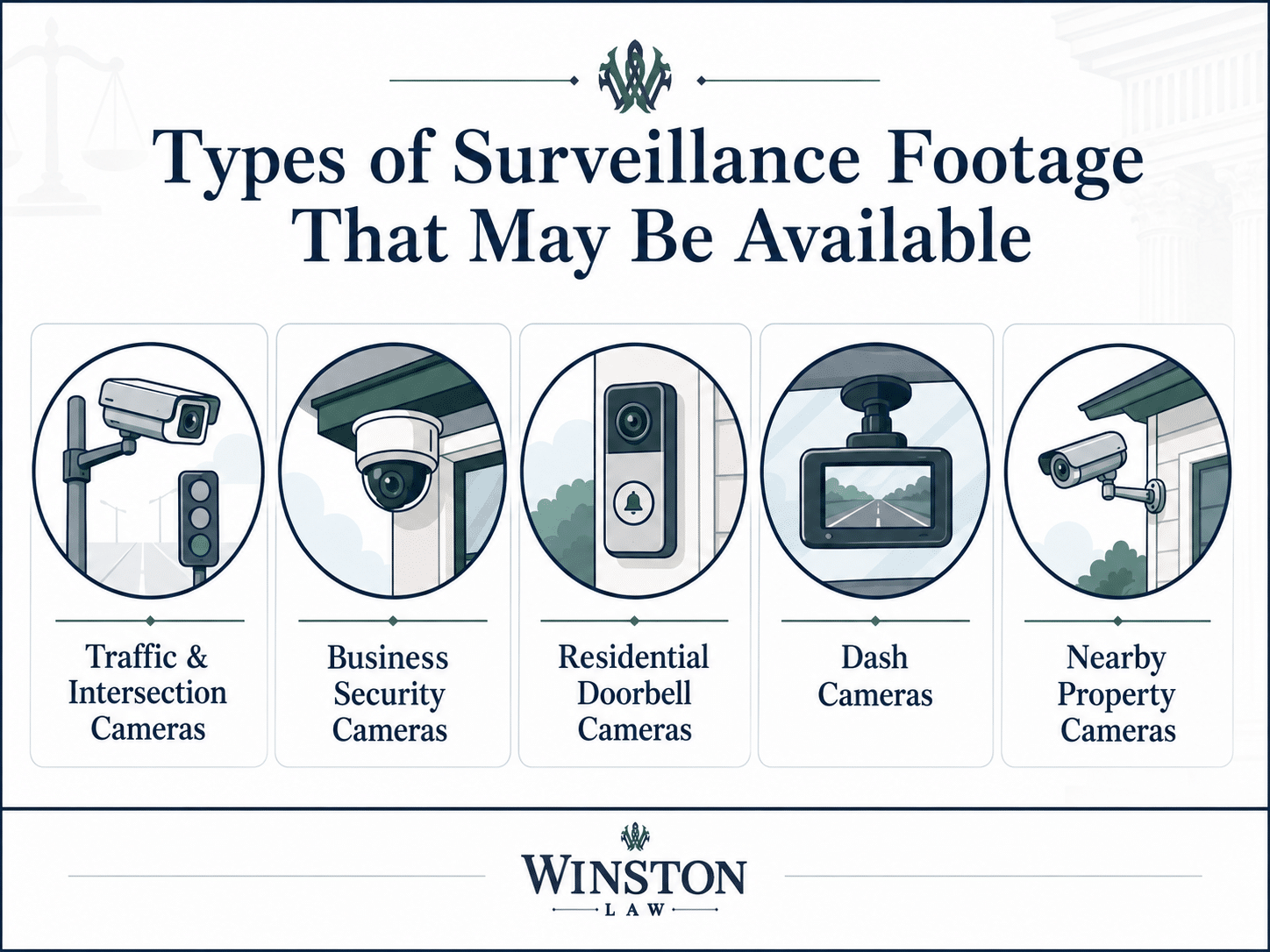
Common sources of surveillance footage include:
- Traffic and intersection cameras: Traffic monitoring systems may capture vehicle collisions, pedestrian accidents, bicycle accidents, or dangerous driving behavior. These recordings can help show who had the right of way, whether a driver ran a red light, or whether a traffic violation occurred.
- Business security cameras: Retail stores, restaurants, office buildings, hotels, parking garages, apartment complexes, and commercial properties often maintain security systems. These cameras can provide important evidence in slip-and-fall accidents, negligent security claims, and other premises liability cases.
- Residential security systems: Doorbell cameras and home surveillance systems may capture crashes, dog attacks, pedestrian incidents, and other accidents near residential properties.
- Dash cameras: Dashcam footage can be particularly useful in car accidents, truck accidents, motorcycle collisions, and pedestrian incidents because it often captures the moments immediately before and during impact.
- Nearby property cameras: Even if the accident did not occur directly on a business or residential property, nearby cameras may still show traffic flow, vehicle movement, sidewalk conditions, lighting, weather, or the actions of people involved.
In disputed accident cases, different sources of surveillance footage can help determine what really happened. It is not uncommon for personal injury lawyers to combine video footage with witness statements, accident reports, medical records, photographs, and other forms of digital evidence to build a stronger claim.
How Video Evidence Can Help Establish Liability
Florida follows a modified comparative negligence system. In some cases, insurance companies argue that an injured person partly caused the accident to reduce or avoid compensation. Surveillance footage can help counter those arguments by showing what actually occurred.
Video evidence may show that:
- A driver ran a red light or failed to stop
- A distracted motorist failed to yield
- A property owner ignored a dangerous condition
- A business failed to clean up a spill or warn customers
- A commercial driver was speeding or following too closely
- A pedestrian, cyclist, or injured person acted reasonably
- An accident happened differently than the insurance company claims
By providing a visual account of the incident, surveillance footage can make it more difficult for insurers or opposing parties to dispute responsibility. It can also help explain the circumstances of the accident clearly during settlement negotiations, mediation, or trial.
Why Surveillance Footage Must Be Preserved Quickly
One of the most important issues with video evidence is timing. Many surveillance systems automatically overwrite recordings after a short period. Some cameras may delete footage within days or weeks. Others may record over old footage even sooner, depending on the storage system.
That means injured people should act quickly after an accident. Waiting too long may allow valuable evidence to disappear before anyone has a chance to review it.
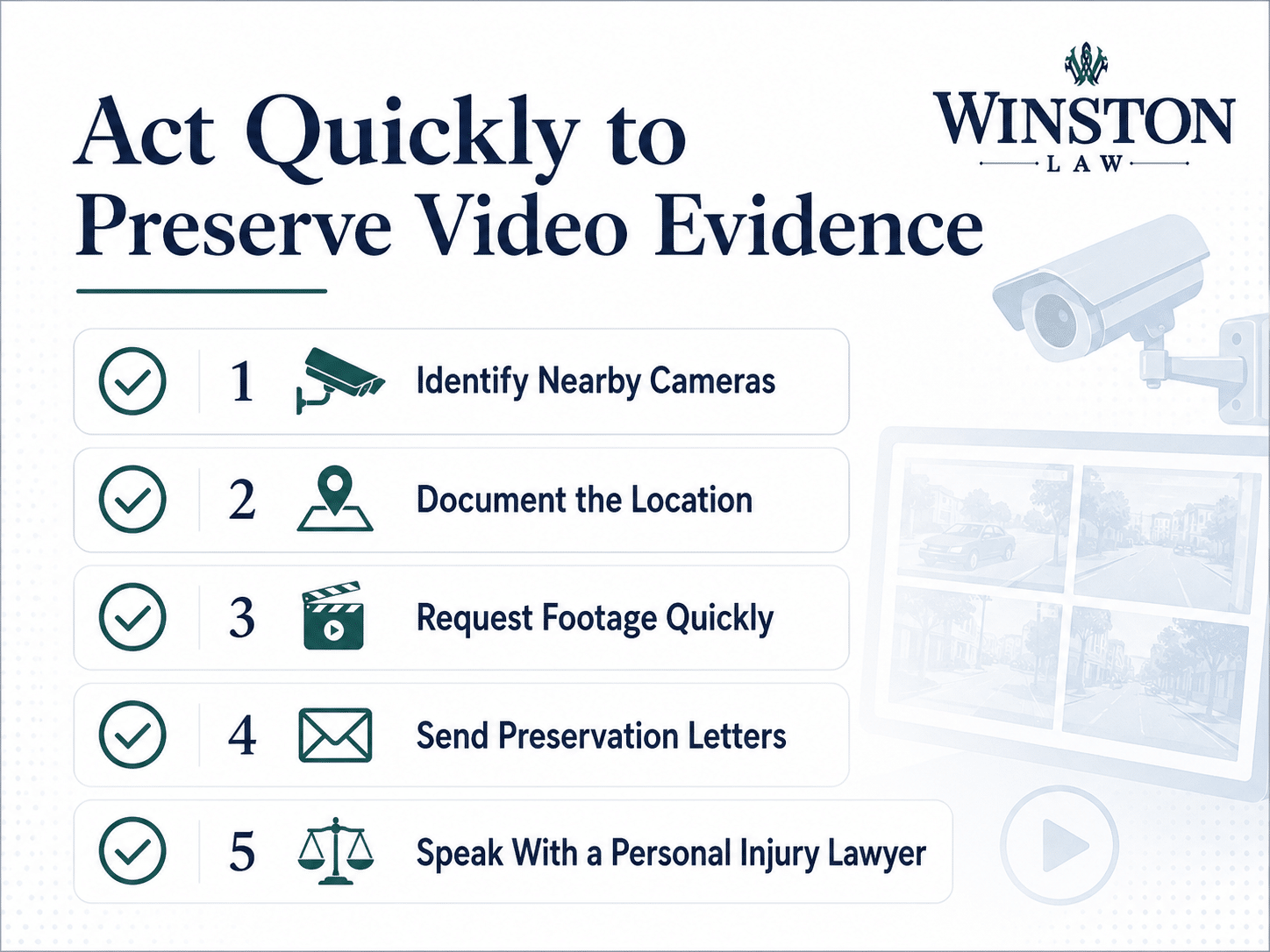
A personal injury attorney can help identify potential sources of video footage and send preservation requests before recordings are lost. These requests may be sent to businesses, property owners, apartment complexes, parking garages, trucking companies, government agencies, homeowners, or other parties who may have relevant footage.
Early investigation may preserve critical information that would otherwise become unavailable. It may also help prevent disputes about whether the footage existed, who controlled it, and whether it was properly saved.
Video Evidence Can Strengthen Settlement Negotiations
Many personal injury claims resolve through settlement discussions rather than trial. Strong evidence can put injured victims in a better position during negotiations because it leaves the insurance company with less room to dispute the facts.
Insurance companies may reevaluate their position when clear surveillance footage supports an injured person’s account of events. In many cases, video evidence makes it more difficult to deny liability, shift blame, or undervalue the claim.
Surveillance footage may also support compensation claims involving:
- Medical expenses
- Lost income
- Future treatment costs
- Pain and suffering
- Permanent injuries and disabilities
- The severity of the accident
- The injured person’s physical limitations after the incident
When combined with medical records, witness statements, expert analysis, and other evidence, video recordings can help create a more complete and persuasive personal injury claim.
Talk to a Fort Lauderdale Personal Injury Lawyer About Preserving Video Evidence
If you or a loved one was injured in an accident in Fort Lauderdale, it is important to identify and preserve surveillance footage as early as possible. Video evidence may show how the accident happened, who was responsible, and why the insurance company should not be allowed to rewrite the facts.
At Winston Law, we represent injured people in Fort Lauderdale and throughout South Florida. Our team can investigate the accident, identify possible sources of footage, send preservation requests, review available evidence, and build a claim that clearly explains what happened.
If you believe surveillance footage may help your personal injury case, reach out to us to schedule a free case evaluation.
Frequently Asked Questions About Surveillance Footage in Personal Injury Cases
Can surveillance footage help prove fault in a personal injury case?
Yes. Surveillance footage can help prove fault by showing how an accident happened, what the parties were doing, and whether unsafe conduct or dangerous conditions contributed to the injury. It can be especially helpful when liability is disputed.
What types of video footage can help a Fort Lauderdale injury claim?
Helpful video footage may come from traffic cameras, business security systems, residential doorbell cameras, dash cameras, parking garage cameras, apartment complex cameras, or nearby properties. The best source depends on where the accident happened and what the footage shows.
How quickly can surveillance footage be deleted or overwritten?
Some surveillance systems delete or overwrite footage within days or weeks. Because storage practices vary, injured people should act quickly after an accident to identify and preserve potential video evidence before it is lost.
Can a personal injury lawyer help obtain surveillance footage?
Yes. A personal injury lawyer can help identify where footage may exist, contact businesses or property owners, send preservation letters, and take steps to obtain relevant video evidence before it is deleted or overwritten.
What if a business or property owner refuses to provide surveillance footage?
If a business or property owner refuses to voluntarily provide footage, a lawyer can evaluate available legal options to obtain or preserve the evidence. The right approach depends on who controls the footage, whether a claim or lawsuit has been filed, and how the evidence relates to the injury case.